
For years, automation promised a future where machines could handle everything — from customer support to content creation, logistics, and even medical diagnosis. But as we enter 2025, that promise has started to evolve. The industry has realized that total autonomy isn’t just impractical; it can be risky. Real-world systems deal with nuance, emotion, and ethics — domains where humans still outperform algorithms. The recent wave of “AI fails” across industries proves it. From news articles generated with factual errors to image models producing culturally insensitive results, we’ve seen what happens when automation operates without oversight. As businesses mature in their AI adoption, they’re rediscovering a fundamental truth: the smartest systems are the ones that keep humans in the loop.
What “Human-in-the-Loop” Really Means
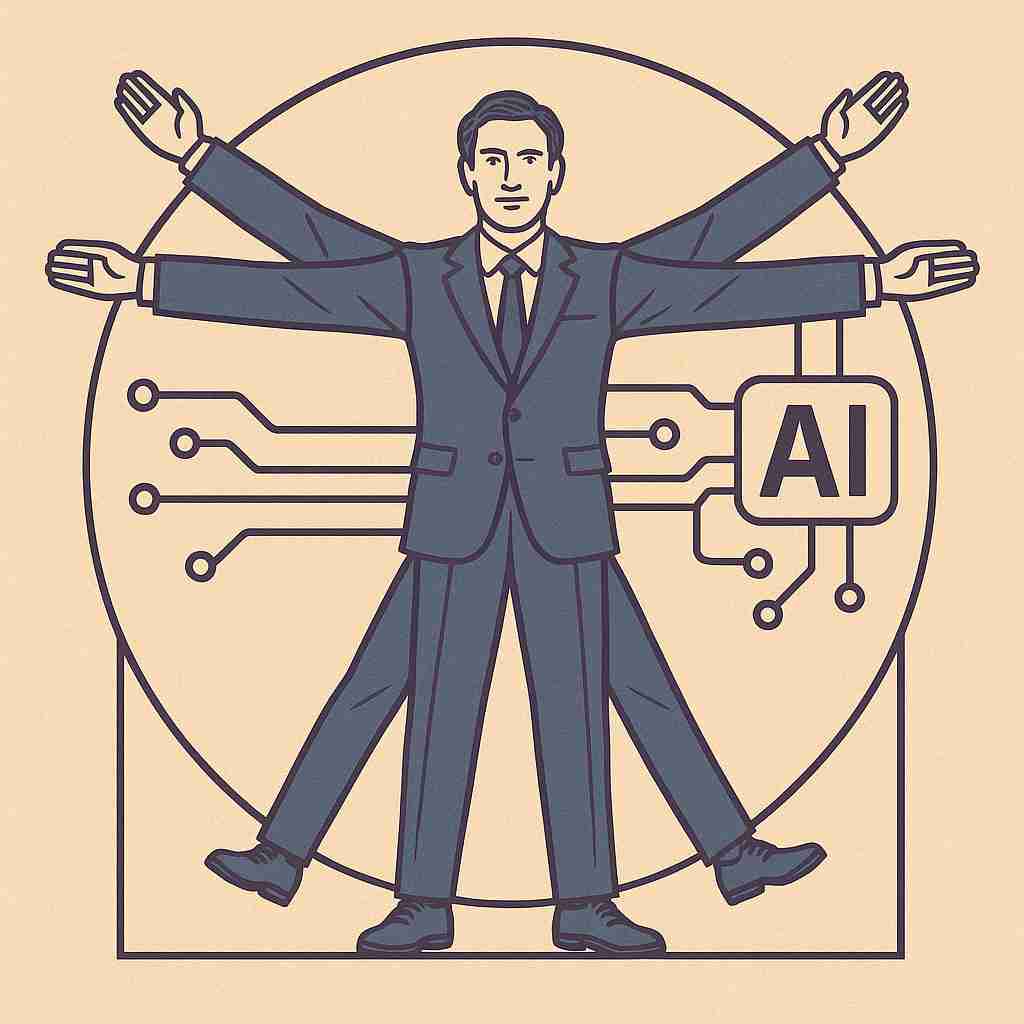
“Human-in-the-loop” (HITL) isn’t just a trendy phrase — it’s an engineering principle. It means designing AI systems that rely on human judgment at key stages: training, validation, and operation. A HITL model doesn’t remove people from the process; it makes them an integral part of it. In customer support, for instance, AI chatbots handle common queries, but when the issue becomes complex or emotional, it escalates to a human agent. In healthcare, algorithms flag anomalies in medical imaging, but a radiologist always makes the final call. And in content moderation, AI filters the bulk of submissions, but human reviewers decide in edge cases where context matters. These examples show how AI and humans can amplify each other — AI provides scale and speed, while humans provide understanding and ethics.
Why 2025 Is the Turning Point
So why is 2025 the defining year for human-in-the-loop systems? Three converging forces explain it.
Regulatory pressure. Laws like the EU AI Act are introducing stricter compliance requirements, demanding transparency and accountability in AI decision-making. Companies can no longer afford “black box” systems. They need audit trails that show when and how humans intervene.
A trust crisis. Generative AI exploded in popularity in 2023–2024, but its limitations became painfully clear. Hallucinated facts, security breaches, and deepfake misuse damaged public trust. Organizations that once raced to automate now find themselves prioritizing control and credibility.
Economic reality. Fully autonomous workflows may look efficient, but the cost of unmonitored mistakes can be massive. A misclassified transaction, a false medical alert, or an inappropriate content recommendation can ripple into financial losses and brand damage.
That’s why 2025 marks a shift from pure automation to augmented automation — systems that automate intelligently, but never blindly.
The Business Case for Human Oversight
Human oversight isn’t just an ethical safeguard; it’s a business advantage. Companies that design human-centered AI outperform those that don’t, because they deliver results that are more accurate, reliable, and explainable. A well-structured feedback loop allows models to improve faster. Humans catch edge cases, spot bias, and ensure outputs align with brand and cultural values.
At Zarego, we see AI as a co-pilot, not a replacement. The goal isn’t to eliminate people from the process, but to free them from repetitive work so they can focus on what machines can’t do — contextual thinking, empathy, and creative problem-solving. This approach leads to better user experiences, faster adaptation to change, and a deeper sense of trust between companies and their audiences.
In industries like healthcare, finance, and education, that trust isn’t optional. It’s a competitive moat. When customers know there’s a human behind the machine — validating, guiding, and improving the system — they engage with greater confidence.
Security and Ethics: The Hidden Strengths of HITL
Security and ethics often determine whether AI initiatives succeed or fail. HITL systems offer a built-in advantage: human oversight acts as a second line of defense against misuse and unintended consequences.
By introducing checkpoints for human validation, organizations can prevent data leaks, flag suspicious patterns, and ensure decisions comply with privacy standards like GDPR or HIPAA. Ethical supervision becomes part of the workflow, not an afterthought.
Zarego integrates these safeguards by design. In every AI project we develop — whether it’s a predictive model, an automation workflow, or a conversational assistant — we embed human checkpoints that protect against drift, bias, and errors. Our approach aligns with the principle of responsible AI: technology that not only performs well but also behaves well.
Human oversight also reinforces explainability. When a system makes a decision, teams can trace how and why it happened, and whether human input influenced it. This transparency builds trust internally and externally — from executives making strategic calls to customers whose data powers these systems.
How to Implement Human-in-the-Loop Systems
Building a human-in-the-loop architecture doesn’t require reinventing your AI stack. It requires designing intelligently for feedback, accountability, and adaptability.
1. Identify the right checkpoints. Not every task needs human validation. The key is to locate the “high-risk, high-impact” steps — moments where an error would be costly or reputation-damaging. In a financial model, that could mean verifying outlier transactions. In a healthcare app, reviewing flagged anomalies before alerting patients.
2. Train for supervision, not replacement. Employees should understand how the AI works, what it monitors, and when to step in. Training staff to interpret outputs, spot drift, and report inconsistencies turns them into co-pilots of the system.
3. Build continuous feedback loops. Every human correction is a learning opportunity. Capture these interventions as structured data so models improve over time. This creates a virtuous cycle — the more humans supervise, the better the AI becomes, and the less supervision it ultimately needs.
4. Use modular architecture. Cloud-native and serverless infrastructures make it easier to inject human validation stages into workflows. For instance, a Make.com or AWS Lambda pipeline can pause for human approval before publishing content or executing an automation.
5. Measure and iterate. Define KPIs for your human-in-the-loop system — accuracy uplift, reduction in false positives, or response time improvements. Use analytics to find the sweet spot between automation speed and human quality.
A case in point: one of Zarego’s clients in healthcare used a HITL workflow to validate AI-detected anomalies in radiology images. By letting specialists confirm or reject the model’s predictions, accuracy increased by 23%, while false alarms dropped dramatically. The system learned faster — and trust among medical staff improved as they saw their feedback directly shape the AI’s evolution.
The Future Is Collaborative
The age of “hands-off AI” is over. The companies leading in 2025 aren’t the ones that automated the most — they’re the ones that automated wisely. The balance between machine precision and human intuition defines this new era of innovation.
Human-in-the-loop AI isn’t a regression from automation; it’s its natural maturity. It acknowledges that intelligence — human or artificial — works best when it’s accountable, adaptable, and aligned with real-world complexity.
As organizations navigate growing regulations, evolving data ethics, and rising user expectations, the path forward is clear: collaboration between humans and machines isn’t just safer — it’s smarter.
Zarego helps organizations design AI solutions that are not only efficient but responsible. From healthcare to finance, education to logistics, we partner with teams to create systems that think fast but act responsibly — combining the best of automation with the wisdom of human judgment. Because the future of AI isn’t about replacing people; it’s about empowering them.
