
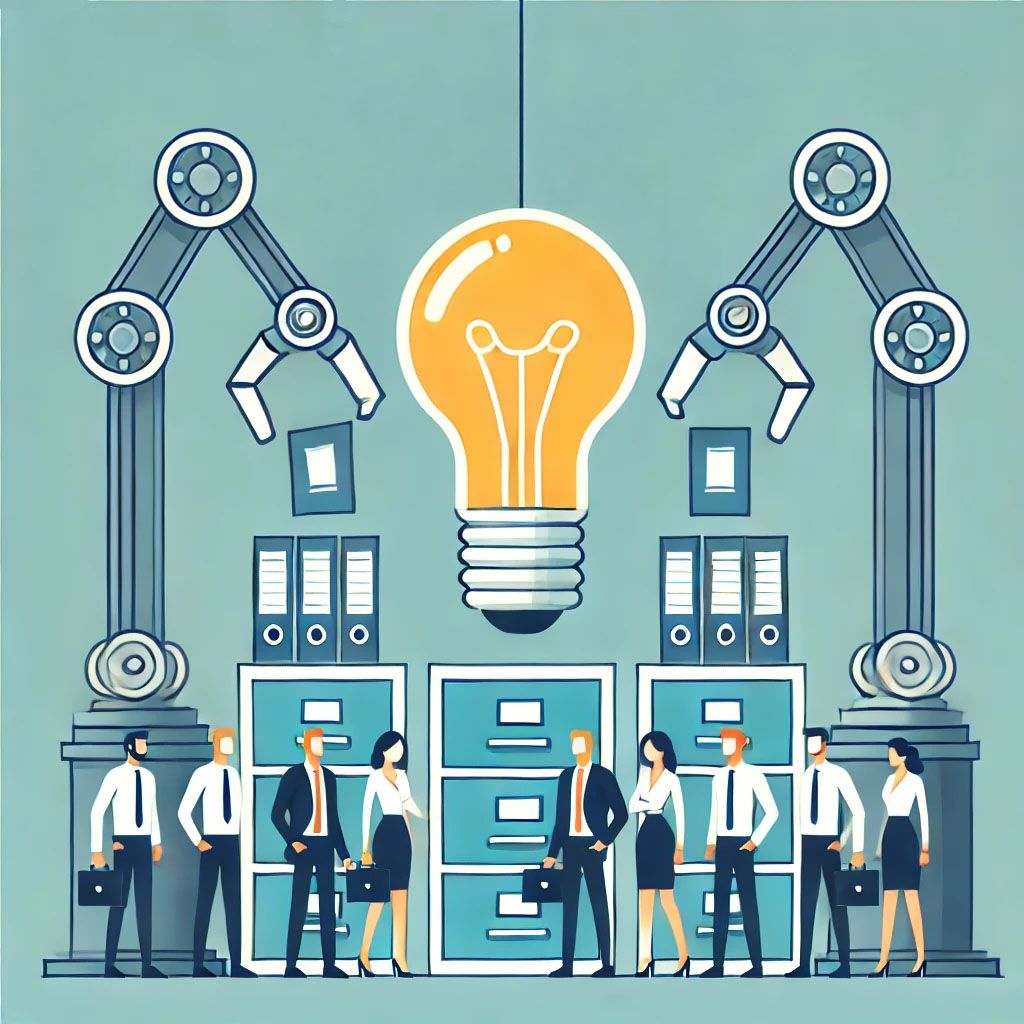

Every company has ambitious goals—innovating products, improving customer experiences, expanding into new markets. But day-to-day reality often looks different. Instead of tackling strategic initiatives, teams spend a staggering amount of time on repetitive, low-value work.
Industry studies suggest knowledge workers spend 40–60% of their time on manual, routine tasks such as moving data between systems, updating spreadsheets, or responding to repetitive inquiries. That’s nearly half the workweek lost to tasks that don’t drive growth or creativity.
Automation and AI are rewriting that equation. When deployed thoughtfully, they don’t replace people—they amplify people. By taking repetitive workflows off their plates, automation gives teams the space to think bigger, move faster, and focus on what really matters: strategy.
The Problem: Time Lost to Busywork
Consider a few common scenarios:
- Marketing: Teams manually assemble weekly campaign performance reports by copying numbers from platforms into spreadsheets.
- Sales: Reps spend hours researching leads—checking LinkedIn, Googling company details, cleaning up CRM entries.
- Finance: Accountants reconcile invoices across multiple systems, matching line items one by one.
- Customer Support: Agents read through every incoming ticket or email just to categorize and assign it.
- Operations: Managers chase status updates through endless email threads and Slack messages.
Individually, these tasks don’t look catastrophic. But in aggregate, they drain time, energy, and focus. A marketing manager might burn 8–10 hours a week on manual reporting. A finance team might lose days closing the books each quarter. A sales team’s productivity tanks when reps research instead of selling.
The opportunity cost is massive: less time for strategy, customer relationships, and innovation.
The Shift: From Simple Scripts to AI-Powered Automation
Automation isn’t new. Teams have long used spreadsheets, macros, and scripts to cut down on repetitive work. But recent advances—particularly the rise of AI and cloud-based automation platforms—have transformed what’s possible.
- Traditional Automation: Rules-based scripts or macros that automate specific, predictable tasks.
- Cloud Automation: Platforms like Zapier, Make.com, and n8n allow non-technical teams to connect apps, create workflows, and trigger actions across systems.
- AI-Powered Automation: Language models and AI APIs can now classify, summarize, enrich, and even draft responses automatically—making automation more adaptable to messy, human-generated data.
This progression means that more processes than ever can be automated—not just repetitive clicks, but also decision-making steps like “classify sentiment” or “summarize a customer’s request.”
At Zarego, we’ve seen firsthand how automation can transform the daily operations of marketing, finance, operations, and customer-facing teams.
Real Examples of Automation Wins
Here are four concrete cases where automation freed teams from repetitive work and gave them more time for strategy.
1. Marketing Reporting on Autopilot
The Problem: Marketing analysts at a mid-size company were spending Mondays manually compiling data from Google Ads, LinkedIn, and HubSpot into a spreadsheet. By the time the report was ready, the team had already lost a day of productive planning.
The Automation: A Make.com workflow pulled data directly from each platform’s API, transformed it into a consistent format, and updated a Google Data Studio dashboard automatically.
The Result: Reports are now generated in real-time. Analysts save 10+ hours per week and instead spend their Mondays analyzing trends, recommending optimizations, and brainstorming campaign ideas.
2. AI-Powered Sales Lead Enrichment
The Problem: SDRs (Sales Development Representatives) at a B2B company wasted hours researching new leads—looking up job titles, company size, and recent news before each call.
The Automation: A workflow enriched incoming leads automatically. When a new contact was added to the CRM, APIs pulled public LinkedIn and company data. An AI model summarized the information into a concise, human-readable “lead brief” for the SDR.
The Result: SDRs no longer spend 15–20 minutes per lead on research. They make 40% more calls per week, focusing on building relationships and closing deals rather than Googling.
3. Customer Support Triage
The Problem: A SaaS company’s support team manually read every incoming ticket to decide whether it was urgent, what category it belonged to, and who should handle it. Average response time was dragging down customer satisfaction.
The Automation: AI models now read incoming tickets in real-time, classifying urgency, sentiment, and product area. Tickets are automatically routed to the right team, with a priority tag if urgent.
The Result: First-response times dropped by 60%. Support agents focus on solving problems, not sorting them. Customer satisfaction scores improved significantly.
4. Finance Reconciliation
The Problem: A growing company struggled with month-end reconciliation. Accountants manually compared transactions across three systems: invoicing software, bank statements, and an ERP. Errors were common, and closing the books took weeks.
The Automation: A Make.com scenario integrated the three systems, automatically matched transactions, and flagged only exceptions for human review.
The Result: Reconciliation that once took days is now completed in hours. The finance team closes the books faster, with fewer errors, and has more time to advise leadership on budget strategy.
Beyond Efficiency: The Strategic Impact
Automation delivers obvious efficiency gains, but the real value lies in what it unlocks.
- Innovation: With manual work reduced, teams have time to experiment with new campaigns, products, or markets.
- Customer Relationships: Sales and support teams can spend more time with customers, listening, solving problems, and building loyalty.
- Data-Driven Strategy: Instead of collecting data, teams analyze it, draw insights, and make smarter decisions.
- Employee Engagement: Removing repetitive, low-value tasks reduces burnout and increases job satisfaction.
Automation isn’t just about cost savings—it’s about capacity. Every hour saved on manual work is an hour invested in growth.
How to Start Small with Automation
The best automation strategies don’t try to overhaul everything at once. Instead, start with a small, high-impact win.
- Identify Pain Points
- Ask teams: “What’s the most repetitive part of your job?”
- Look for tasks that are rules-based, time-consuming, and involve moving data between systems.
- Ask teams: “What’s the most repetitive part of your job?”
- Run a Pilot
- Pick one process (weekly reporting, lead enrichment, expense approvals).
- Automate it with tools like Zapier, Make, or Airtable.
- Add AI where interpretation is needed (e.g., text classification, summarization).
- Pick one process (weekly reporting, lead enrichment, expense approvals).
- Measure ROI
- Track time saved, errors reduced, and improvements in outcomes.
- Share these results internally to build momentum.
- Track time saved, errors reduced, and improvements in outcomes.
- Scale Intentionally
- Once the ROI is clear, expand automation into other departments.
- Build a culture of continuous improvement.
- Avoid “automation for automation’s sake”—align every workflow with business goals.
- Once the ROI is clear, expand automation into other departments.
The Outcome: More Human Time for Strategic Work
Automation doesn’t eliminate jobs. It eliminates the parts of jobs that humans find least fulfilling—copy-paste tasks, repetitive classification, manual reconciliation.
The payoff isn’t just efficiency. It’s strategic capacity: more time to think, to innovate, to connect with customers, to steer the company toward growth.
At Zarego, we’ve helped companies of all sizes—from startups to established enterprises—automate repetitive workflows and unlock new levels of productivity. The results are consistent: happier teams, faster execution, and stronger strategic outcomes.
Let’s Talk
If your team is buried in repetitive work, it might be time to explore automation.
👉 Want to see what automation could unlock for your business? Let’s talk about your workflows, and we’ll help you design a roadmap that frees your team to focus on strategy, growth, and innovation.
